


Lincolnshire sausage is one of England's most distinctive regional sausages - and one of the simplest. It comes from a county that has been serious about pork for centuries: Lincolnshire's flat, fertile farmland made it one of England's great pig-rearing regions, and the sausage that came out of that tradition reflects the agricultural straightforwardness of the place. No elaborate spice blends, no smoke, no novelty. Just good pork and sage.
Sage has been the defining flavour of Lincolnshire sausage for as long as records exist. The herb grew abundantly in the region and became so closely associated with the sausage that the two are now inseparable - where Cumberland is built on black pepper, Lincolnshire belongs entirely to sage. The pork is coarsely ground (a key point of distinction from the finer-textured sausages you'll find further south), the links are formed in the conventional way rather than the Cumberland coil, and the seasoning is deliberately restrained so nothing overshadows the herb.
The Lincolnshire Sausage Association has long argued it deserves the same recognition as Melton Mowbray pork pies and Stilton cheese, which tells you how seriously the county takes its heritage. Whether or not the paperwork ever goes through, the recipe itself is worth protecting.
Ingredients
- Pork shoulder, diced: 750 g (26.5 oz)
- Pork fat, diced: 150 g (5.3 oz)
- Salt: 18 g (0.6 oz)
- Black pepper, ground: 4 g (0.1 oz)
- Fresh sage, finely chopped: 8 g (0.3 oz)
- Rusk or breadcrumbs: 50 g (1.8 oz)
- Cold water: 30 ml (1 fl oz)
- Hog casings: 2 m (6.6 ft)
Instructions
- Dice the pork and fat, then chill in the freezer for 45–60 minutes until firm but not frozen solid.
- Soak the hog casings in warm water for at least 1 hour and chill grinder and stuffer parts if possible.
- Grind the chilled meat through a 6–8 mm plate into a cold bowl and return to the fridge.
- Measure the seasoning and soak the rusk or breadcrumbs in the liquid for 2–3 minutes.
- Add all ingredients to the mince and mix by hand until tacky and cohesive.
- Cover and refrigerate the mixture for 20–30 minutes to firm up.
- Fry a small test piece, taste, and adjust seasoning if needed.
- Stuff gently into casings, avoiding overfilling, and twist into even links.
- Rest the sausages, covered, in the fridge for at least 12 hours before cooking.
- Cook gently by pan-frying, grilling, or baking until browned and cooked through.
How to eat it?
The full English is the obvious answer, and Lincolnshire holds its own beautifully on a breakfast plate - the sage cuts through egg yolk in a way that Cumberland's pepper doesn't quite manage. But it's worth thinking beyond breakfast.
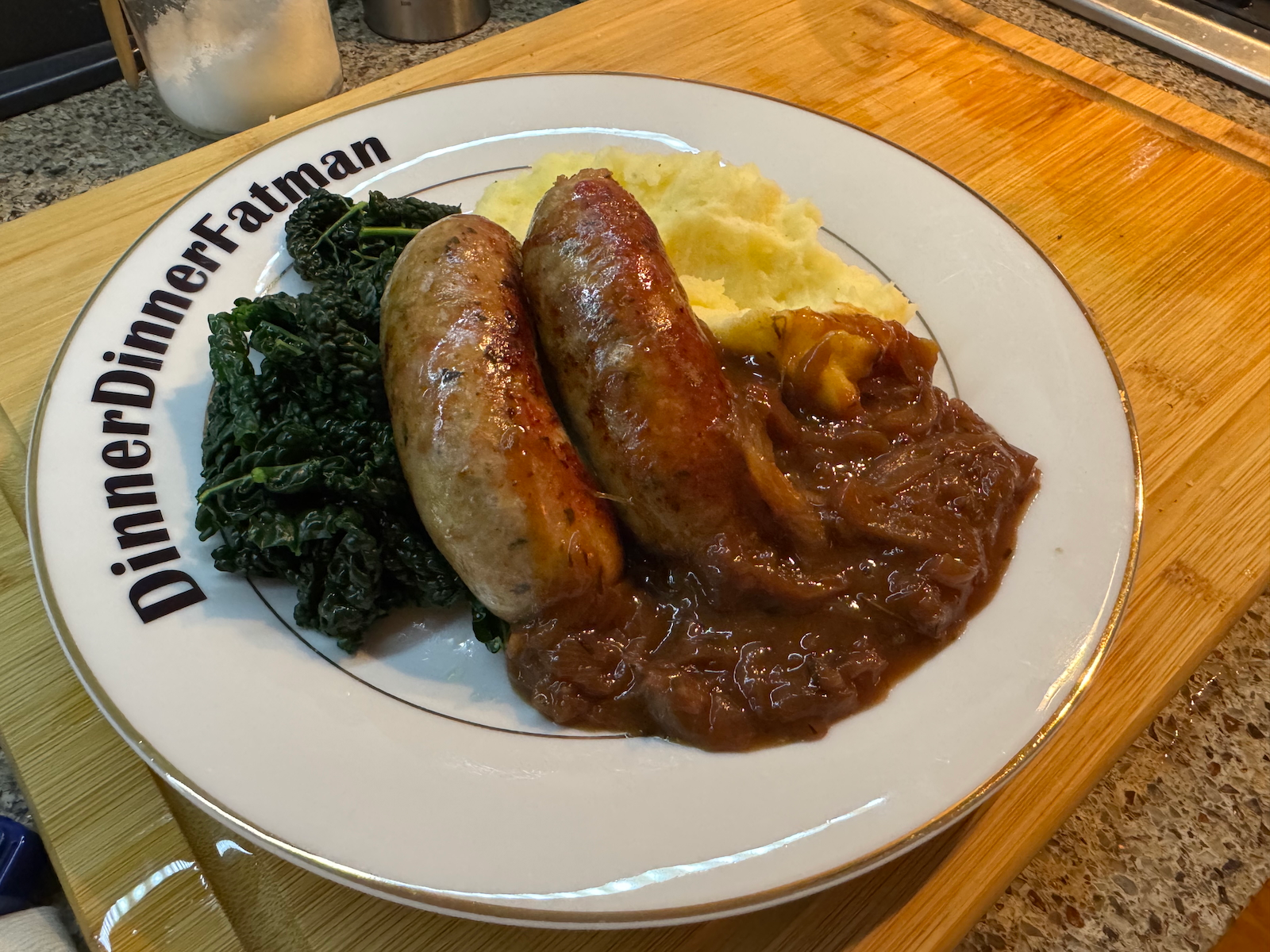
A simple toad-in-the-hole is probably the best use of a Lincolnshire sausage outside of breakfast - the batter tempers the sage and the whole thing becomes something genuinely comforting. Bangers and mash works just as well, ideally with a proper onion gravy that leans savoury rather than sweet. Cold, sliced thickly and eaten in a bread roll with mustard the day after cooking is also not a bad way to spend a Saturday.
What doesn't work: anything that fights the sage. Heavy tomato sauces, aggressive spicing, or pairing with other strongly herbed ingredients tends to muddy what should be a clean, simple flavour. Keep it British, keep it unfussy.


